
The Journal · The Brantford Club
The Third Place: What It Is, and the One Brantford Has Kept Since 1898
A third place is the sociologist Ray Oldenburg’s term for the rooms beyond home and work where people gather regularly, informally, and gladly. Brantford has kept one at 98 George Street since 1898: The Brantford Club, a private business and social club in a house older than the city.
The phrase is having its moment, and the idea deserves it. In 1989 the sociologist Ray Oldenburg published The Great Good Place and gave a name to something every good city once had in abundance: the third place, “a generic designation for a great variety of public places that host the regular, voluntary, informal, and happily anticipated gatherings of individuals beyond the realms of home and work.” The first place is home. The second is work. The third is where a person goes to be among company, and The Brantford Club has been exactly that room, at exactly one address, since December 31, 1898.
Between home and work
Oldenburg’s third place is one you look forward to, and a single dinner at 98 George Street is a fair trial of that, since no membership is asked of anyone at a first dinner. Bring someone from the first place or the second. One email naming the night and how many will sit with you is all the house needs to begin.
What is a third place?
A third place is any setting, outside home and outside work, where the same people turn up often enough to know one another, where nobody presides, and where conversation is the main thing on the table. Oldenburg described the habits such places share, as his work is commonly summarized: they sit on neutral ground; they level rank at the door; the regulars give the room its character; the mood runs playful; and the whole thing feels, in his phrase, like a home away from home. Cafes have managed it. Barbershops have managed it. Legion halls, diners, libraries, and pubs have managed it. The point is never the building; the point is the standing company.
“A third place is somewhere you can arrive without a reason. If you need an occasion to walk in, it is not one.”
Sabrina Van Leeuwen, Club Manager
Where the Third Places Went
The disappearance has been measured, mostly in the United States, and the American record is the clearest warning available. Robert Putnam documented the slide in Bowling Alone: between 1980 and 1993 the number of American bowlers rose 10 percent while league bowling fell 40 percent, and by his count the average number of associational memberships fell by about a fourth over a quarter century. People kept the activities and lost the company. The stakes are not sentimental. The U.S. Surgeon General warned in a 2023 advisory that lacking connection “can increase the risk for premature death as much as smoking up to 15 cigarettes a day,” with roughly half of American adults reporting loneliness; a meta-analysis of 148 studies had already found that people with stronger social relationships showed a 50 percent higher likelihood of survival over the study periods. Canada keeps quieter statistics with the same direction: Statistics Canada reports more than 1 in 10 Canadians aged 15 and up feel lonely always or often. The research is American and Canadian; the pattern is Western; the cure, in every version, is a room with company in it.
The Charter of 1898 Used Different Words for the Same Idea
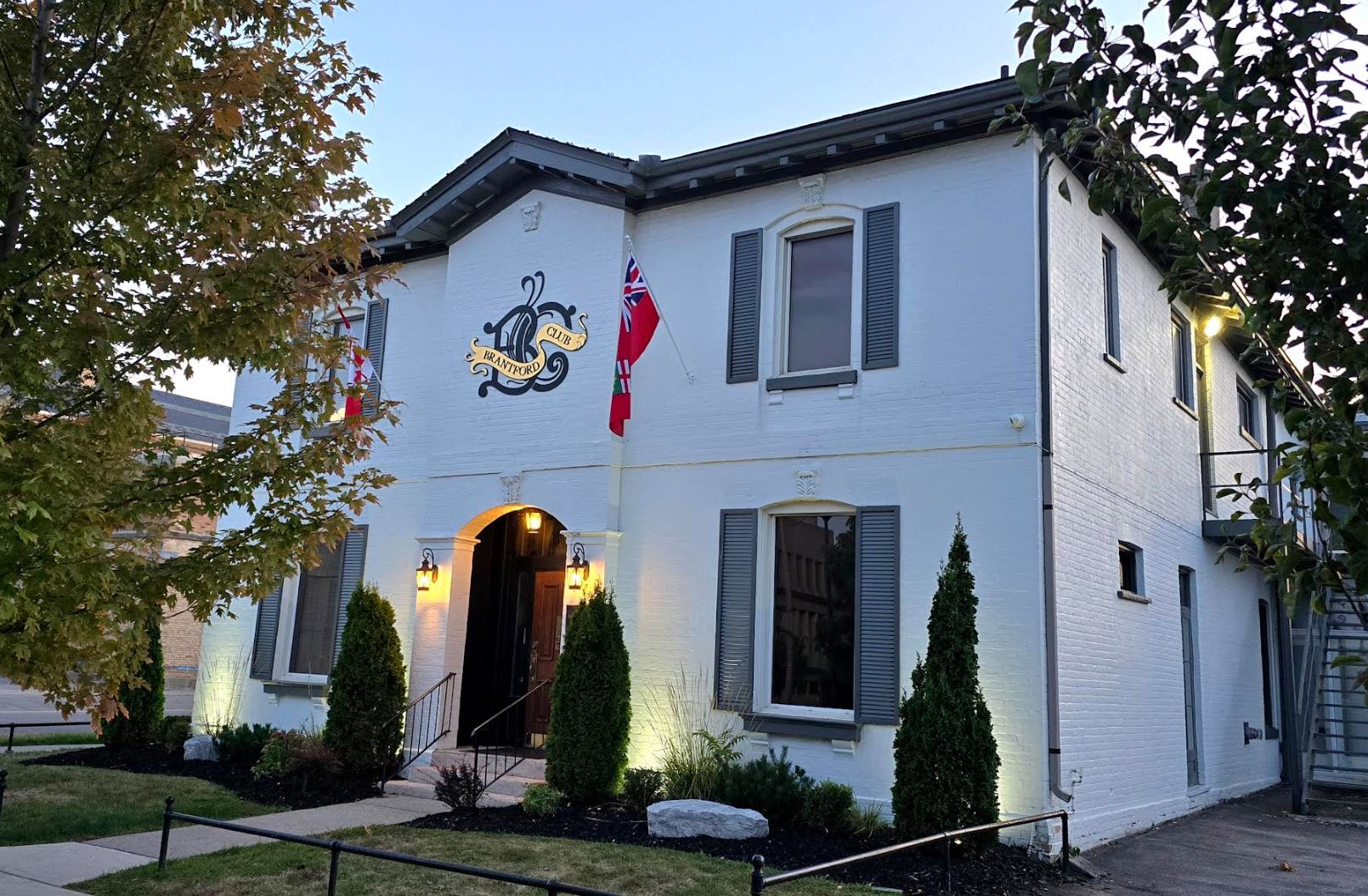
Brantford did not wait for the vocabulary. When five men incorporated The Brantford Club in July 1898, the framed Charter stated its purpose in one clause: “to establish and maintain a social club.” That is the whole third-place idea in the plain legal English of 1898. Not a trade association, not a lodge with obligations, not a dining company: a standing room for regular, voluntary, happily anticipated company, in the c. 1855 house the Club bought at George and Nelson Streets and has never left. The door opened on the last night of 1898, and the habits Oldenburg would catalogue ninety years later have been kept at that address through every decade since: the regulars, the leveling table, the conversation that is the actual point of the room.
The Honest Difference
Oldenburg wrote about public places, and a private club is not one; the difference should be said plainly rather than written around. The Brantford Club’s door opens by asking. What the asking buys is the part of the third place that public rooms struggle to keep: the same faces on the same evenings, year over year, in rooms that no landlord will re-let and no franchise will rebrand. Most of the continent’s third places died by lease, by sale, or by everyone staying home. This one bought its house in 1898 and stayed; the entry on Sociable and the social club walks the two kinds of third place Brantford keeps.
Most third places pass through a city; this one bought the house in 1898 and stayed.
Questions readers ask about third places
What is a third place?
The sociologist Ray Oldenburg coined the term in his 1989 book The Great Good Place: the rooms beyond home and work where people gather regularly, voluntarily, and informally, with conversation as the main activity.
What are examples of third places?
Cafes, pubs, barbershops, libraries, diners, legion halls, and clubs. The building matters less than the habit: the same people, returning gladly, with no agenda beyond the company.
Why are third places disappearing?
Researchers point to more time at home and on screens, car-first city design, and the steady closing of the rooms themselves. Robert Putnam documented the American decline in associational life; the U.S. Surgeon General has since called the resulting isolation a public health concern.
Is a private club a third place?
It keeps the habits of one: regulars, a leveling table, and conversation as the point of the room. It differs in one respect, which The Brantford Club states plainly: the door opens by asking. The room itself has been kept at 98 George Street since 1898.
Related: how the city held on to one club since 1898 · the private members’ club, defined
The Brantford Club, 98 George Street, Brantford, Ontario N3T 2Y4 · Open in Google Maps
The third place is still here
Home is the first place and work is the second. Brantford’s third has kept one address since 1898, and a chair in it is asked for by email.
manager@thebrantfordclub.com · 519-752-0931 · Membership at the Club
