
The Journal · The Brantford Club
Brantford Speakeasy History: When the Bars Went Dark in 1916
Ontario went dry on September 16, 1916, under the Ontario Temperance Act, and Brantford’s last nine licensed hotels went dark with it. The city’s speakeasy era left almost no paper behind; the fullest drinking record Brantford kept through the dry years belongs to The Brantford Club at 98 George Street.
The word conjures Chicago: a hidden door, a password, a trumpet somewhere in the back. Brantford’s version of the dry years was quieter and better documented, and the record of it sits in two books: F. Douglas Reville’s 1920 county history, which counted the city’s licenses down from fifty-three to none, and the minute books of The Brantford Club, which kept writing through the whole drought. This entry follows the record, because the record is the part nobody else kept.
No password at the door
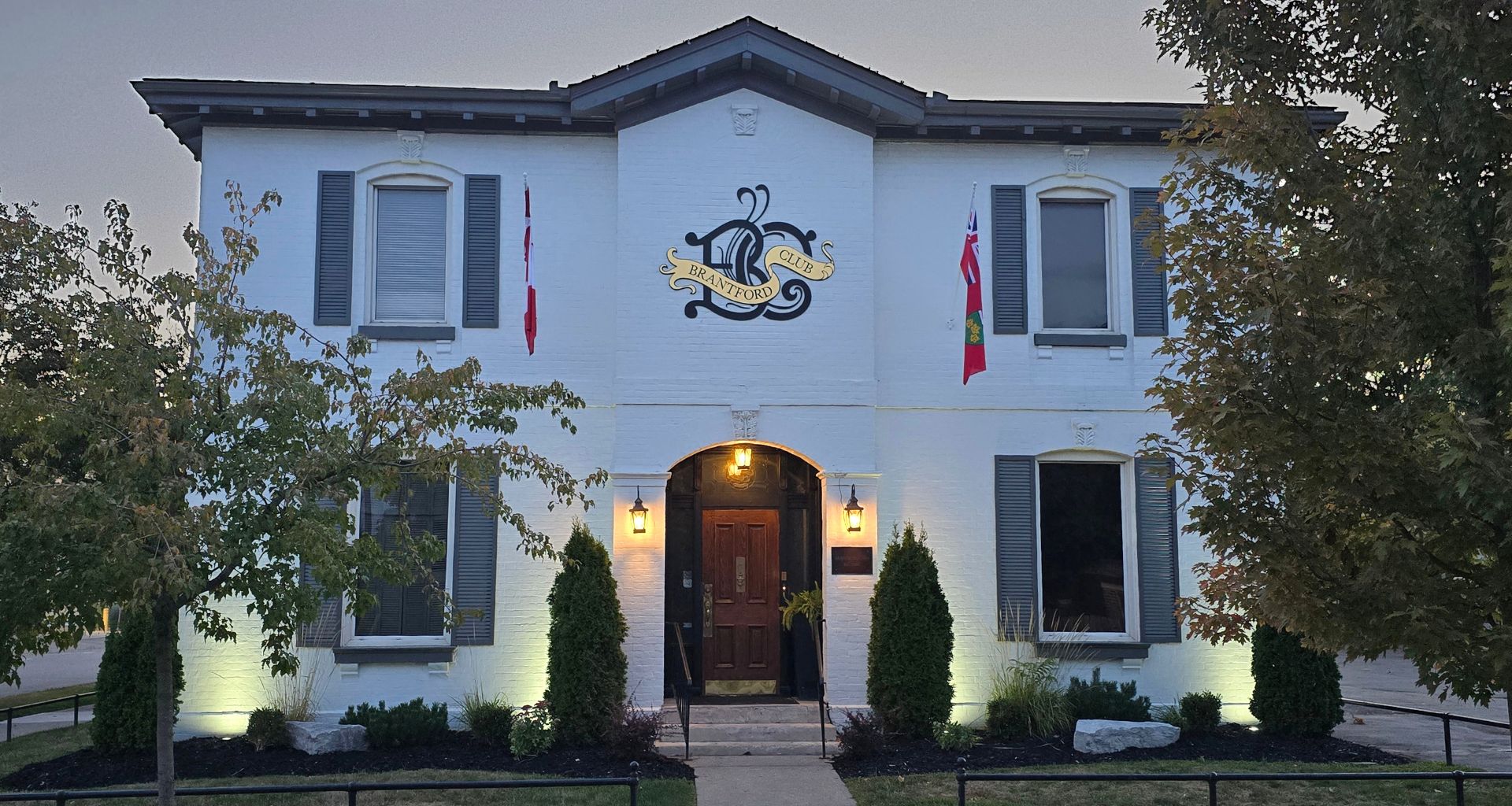
The house that wrote down every loss of the dry years still lays its dinner table at 98 George Street, out in the open. A first dinner there takes no password and no membership. Send a plain email with the night and how many are in your company, and the answer comes back in writing, the way this house likes things done.
Did Brantford have speakeasies?
Almost certainly, and almost entirely off the page. A speakeasy keeps no minute book, files no license return, and takes out no advertisement, so the city’s illegal drinking rooms survive mostly as family stories rather than documents. What the record does preserve is everything around them: the law that created the thirst, the nine hotels whose bars went dark, and one club that wrote its troubles down. Where the American cities got the romance, Ontario got the Ontario Temperance Act, passed April 27, 1916 and in force that September 16, closing every licensed bar in the province for more than a decade.
What Closed: Nine Hotels and Three Shops
Reville’s county history names Brantford’s last licenses at abolition in 1916: the Kerby, the American, the Belmont, the Prince Edward, O’Rileys’, Benwell’s, the Bodega, the Imperial, and the Grand Valley, nine hotels in all, plus three shop licenses that could sell but never pour. The arc he draws is the whole temperance century in three numbers:
The Kerby deserves its own pause. The hotel where a room full of Brantford men chose the Club’s first executive in 1898 was still holding one of the city’s last bar licenses when the lights went out eighteen years later. The Journal has told the Kerby House story on its own.
The Club That Wrote It Down
The Brantford Club felt the Act within a fortnight. The Club’s minutes of September 28, 1916 record a general discussion on the state of the Club with licensing withdrawn, the services of two boys dispensed with for want of work, and the Steward’s arrangement rebuilt around what the house could still lawfully serve. The years that followed were the hardest in the Club’s history; by 1921 it was raising money from its own members through a bond issue to keep the door open. It worked. The Journal tells that survival in full in The Club That Would Not Close, and the house’s older drinking record, down to the price of two drinks in 1909, in the bar ledger entry. No hidden door and no password: just a club that endured the dry years in writing, which is rarer than a speakeasy ever was.
“Someone nearly always asks me where the hidden room was, usually with a drink in hand. I point them to the minute books instead. They look let down for about a minute, and then they want to know what else the house wrote down, and the evening goes on from there.”
Sabrina Van Leeuwen, Club Manager
The blind pig kept no minute book; this house kept everything.
Questions readers ask about Brantford in the dry years
When did the bars close in Brantford?
September 16, 1916, when the Ontario Temperance Act came into force province-wide. Brantford had nine licensed hotels left at abolition, among them the Kerby, the American, the Bodega, and the Imperial.
How many bars did Brantford have before Prohibition?
Fifty-three inn and saloon licenses in 1854, when the town held fewer than four thousand people. By 1916 the count had fallen to twelve, nine hotels and three shops, for a city of 25,420. The 1920 county history records the rest: none.
Did Brantford have speakeasies during Prohibition?
Illegal drinking certainly happened, but speakeasies kept no records, so almost none of it survives on paper. The fullest drinking-era record the city kept through the dry years is the minute books of The Brantford Club.
What happened to The Brantford Club when Ontario went dry?
The minutes of September 28, 1916 record the immediate damage, and by 1921 the Club was raising a bond issue from its own members to survive. It did, in the same house at 98 George Street it has kept since 1898.
The dry years ended; the record keeping never did. The longer story is on the history page, and the Journal keeps the rest. Nothing is hidden about it now; a booked evening at the Club happens in the open.
The Brantford Club, 98 George Street, Brantford, Ontario N3T 2Y4 · Open in Google Maps
The house that kept its minutes
The blind pigs left no paper and the Club recorded even the loss of its licence, in the Minutes of September 28th, 1916. That habit of writing things down is still the house’s manner, and so is the welcome.
manager@thebrantfordclub.com · 519-752-0931 · Membership at the Club
